Launch offer — valid today only

📄 Digital book in PDF · read it on your phone or print it

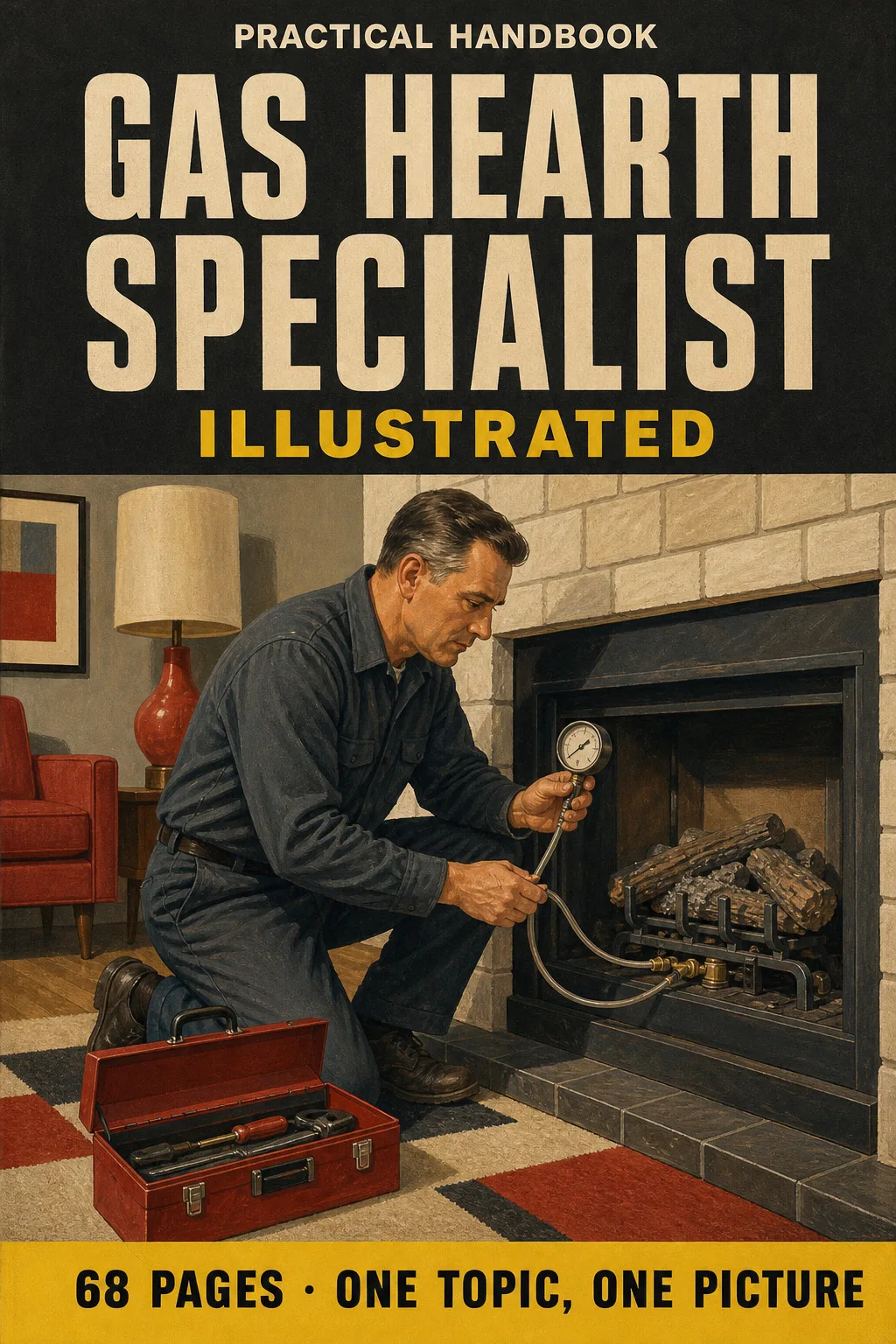
Gas Fireplace Venting, Pressure and Ignition in Drawings: Every Check in the Same Order One Topic on Every Page

Venting and terminations, the manometer, combustion air, the combination gas valve, millivolt troubleshooting, clearances to combustibles, the framing drawing and the annual service. Each topic gets its own page: the drawing first, then what you need to remember. 68 illustrated pages.

YES, I WANT THE ILLUSTRATED BOOK

🔒 Secure checkout · PDF by email · 30-day guarantee

Every topic, its own pageEach check drawn, with the explanation right beside it
68 illustrated pages8 parts, from gas hearth basics to your review plan before the exam
Up-to-date sourcesNFPA 54 / IFGC (2024 editions), NFPA 211 and the manufacturer's listed instructions
PDF by emailFormat

Look Inside the Book

Every page has one big drawing and a box with the numbers and steps you need to know:

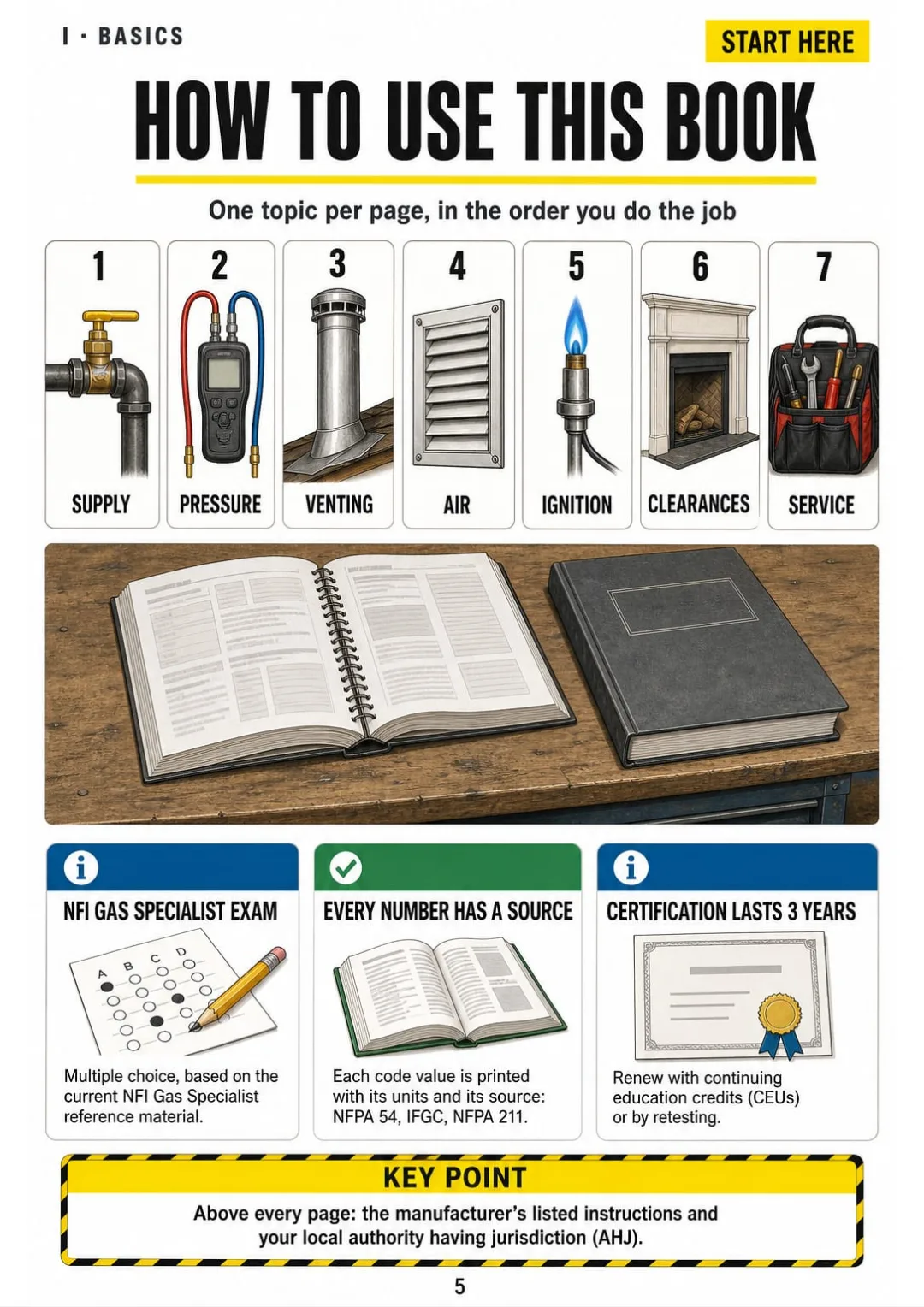
7 job stages, one topic per page, every code value with its source
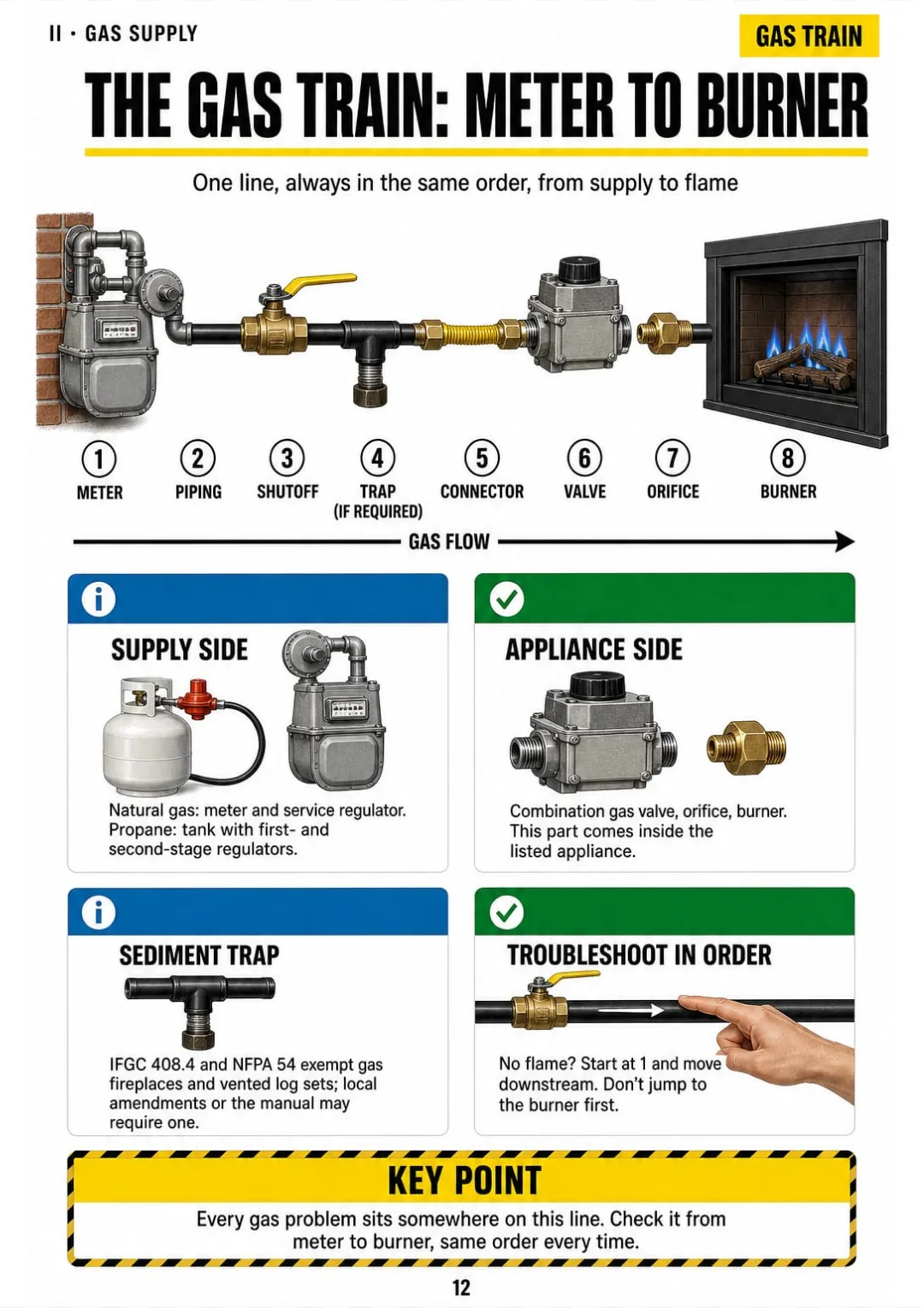
Meter → piping → shutoff → trap → connector → valve → orifice → burner, in one drawing.
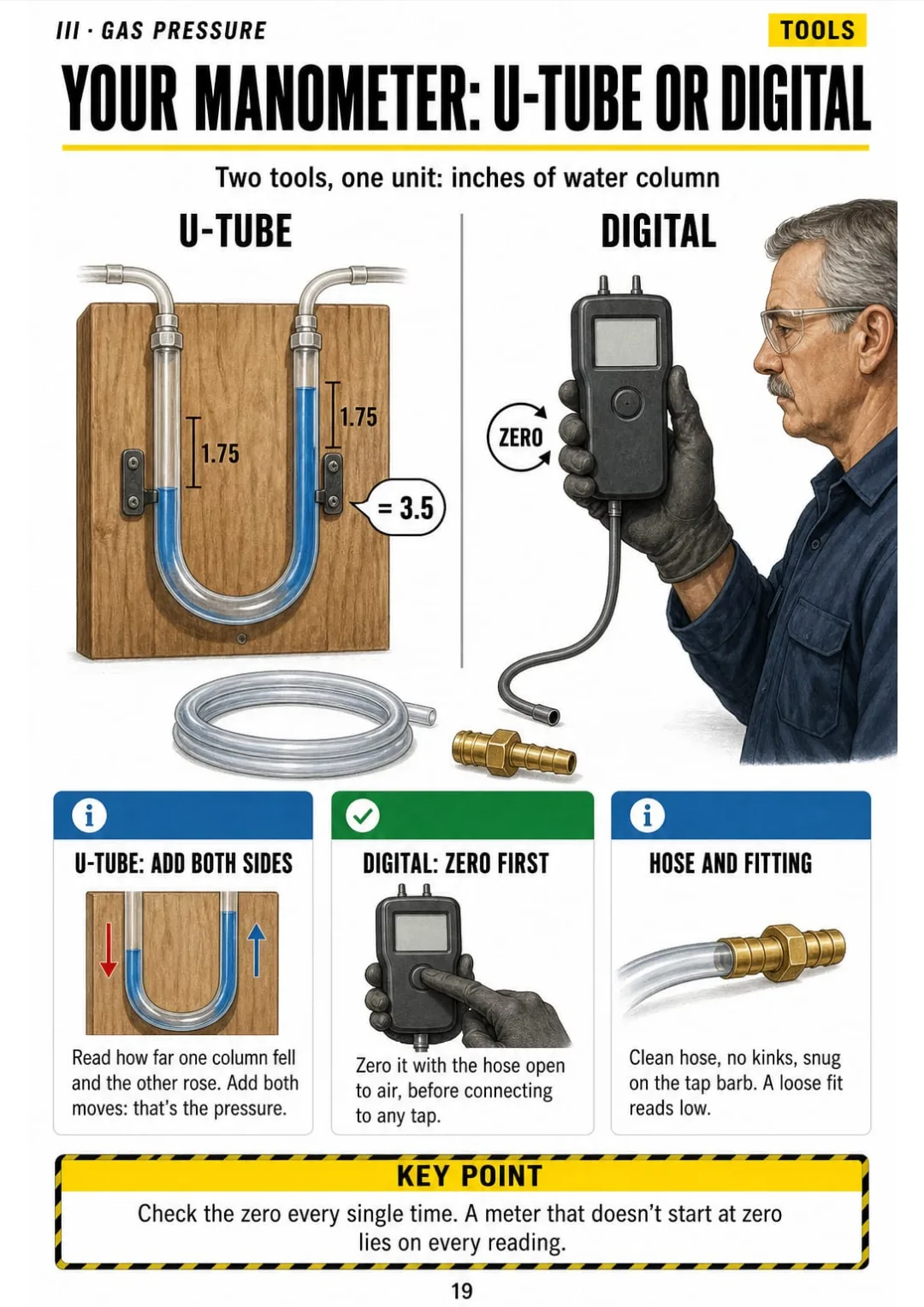
U-tube: add both column moves (1.75 + 1.75 = 3.5 in. w.c.) · Digital: zero before connecting
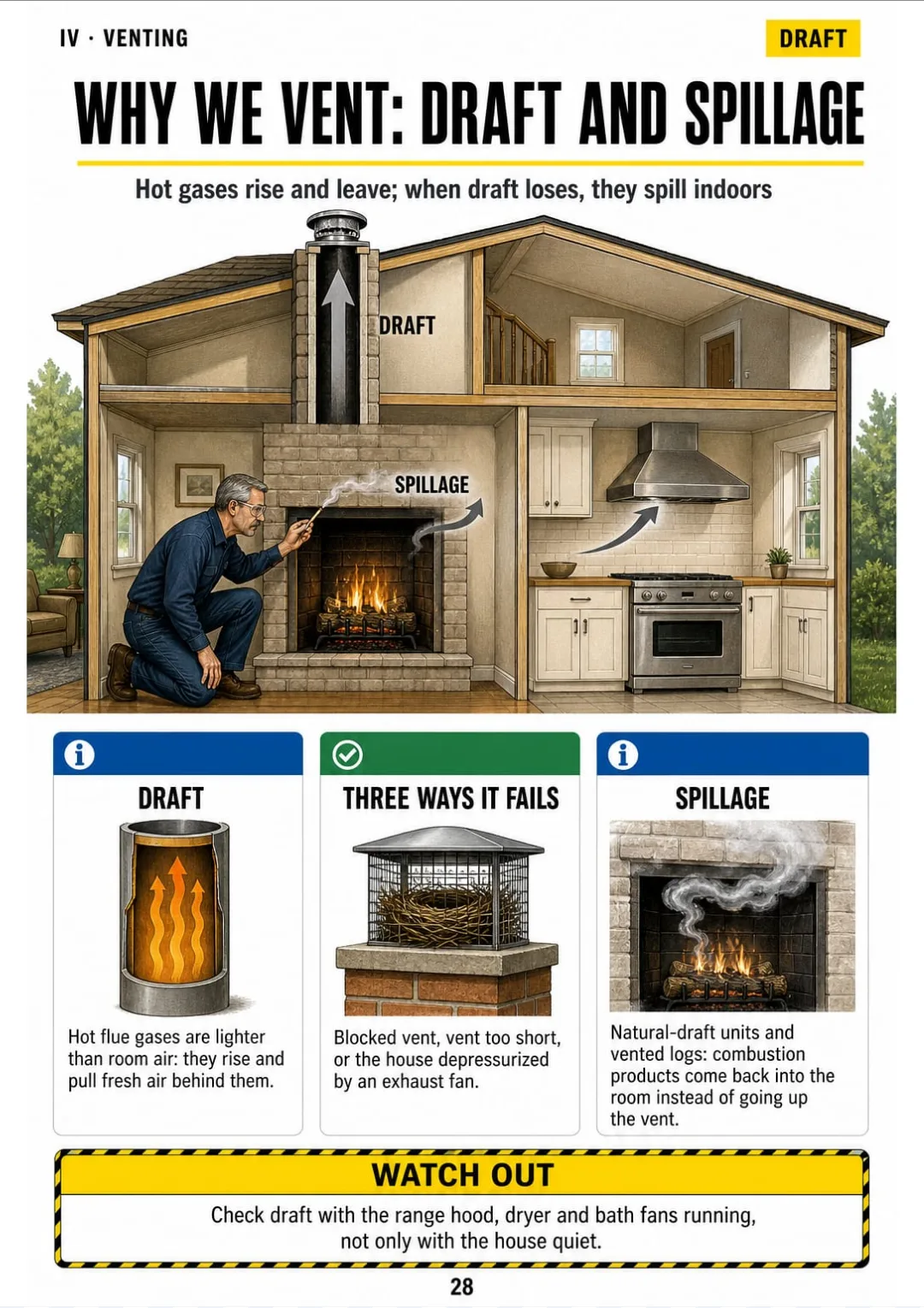
Draft vs spillage: blocked vent, short vent or exhaust fan.
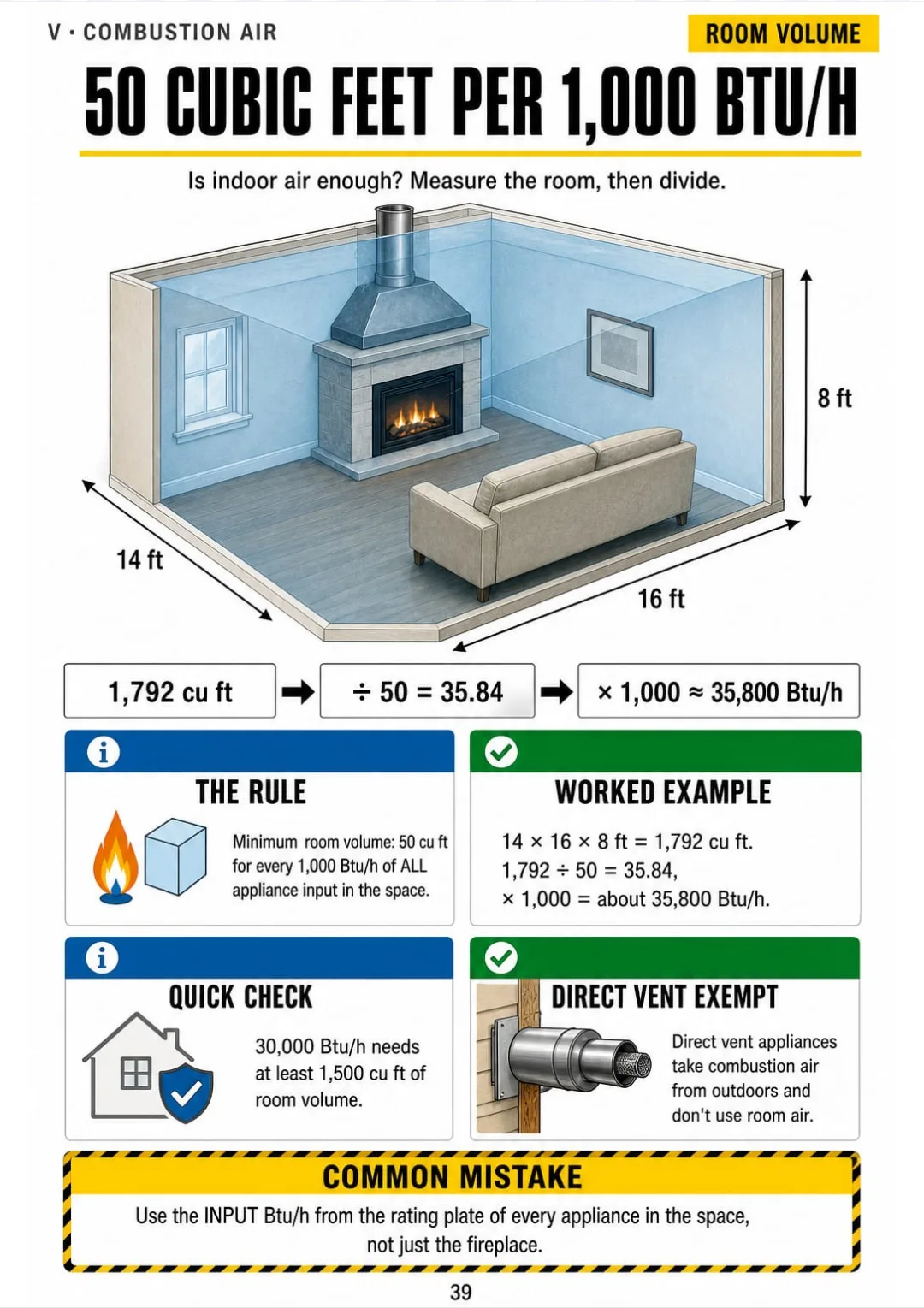
14 × 16 × 8 ft = 1,792 cu ft: enough indoor air for about 35,800 Btu/h.
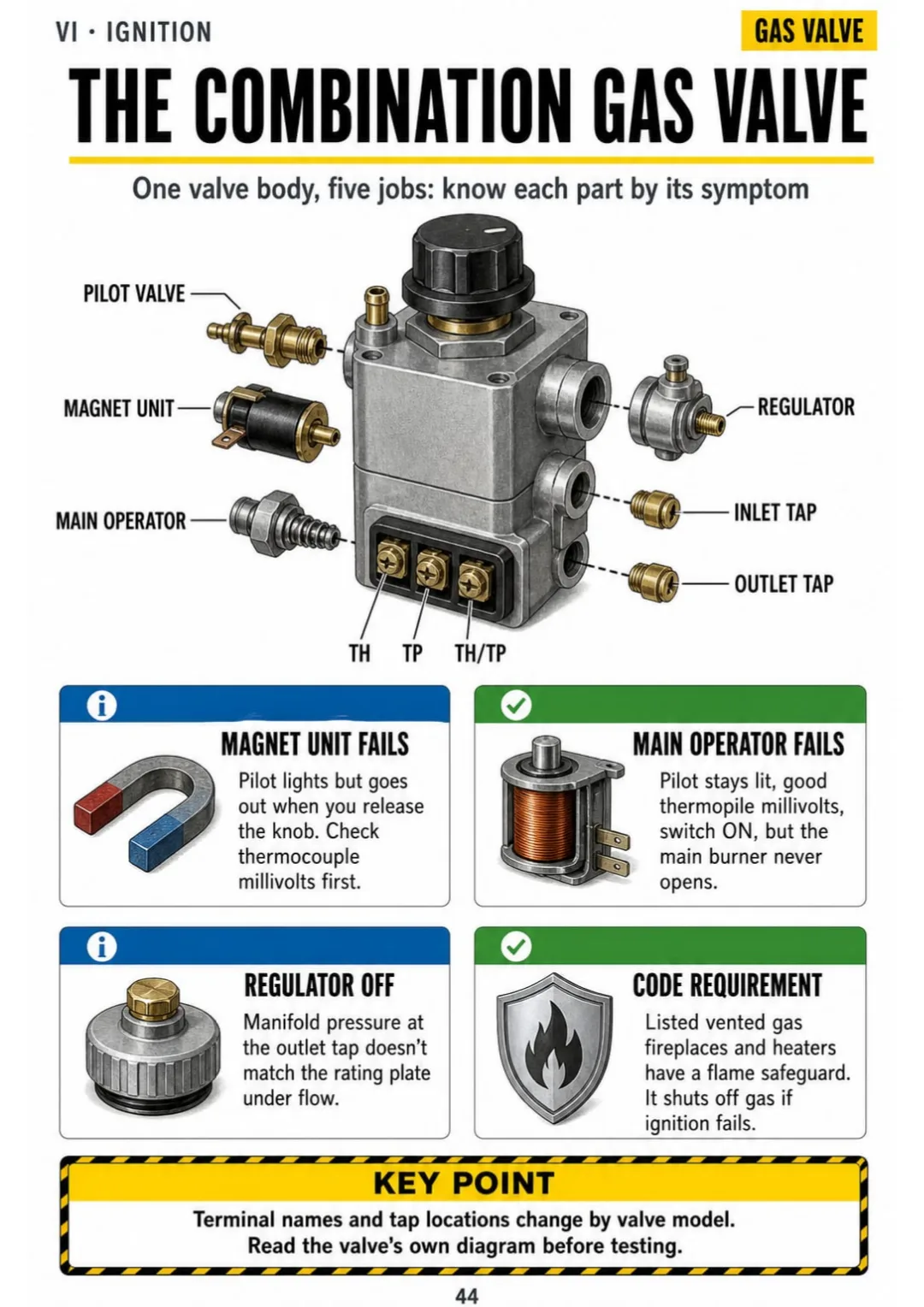
Pilot valve, magnet, main operator, regulator, taps and TH/TP terminals, each with its failure symptom.
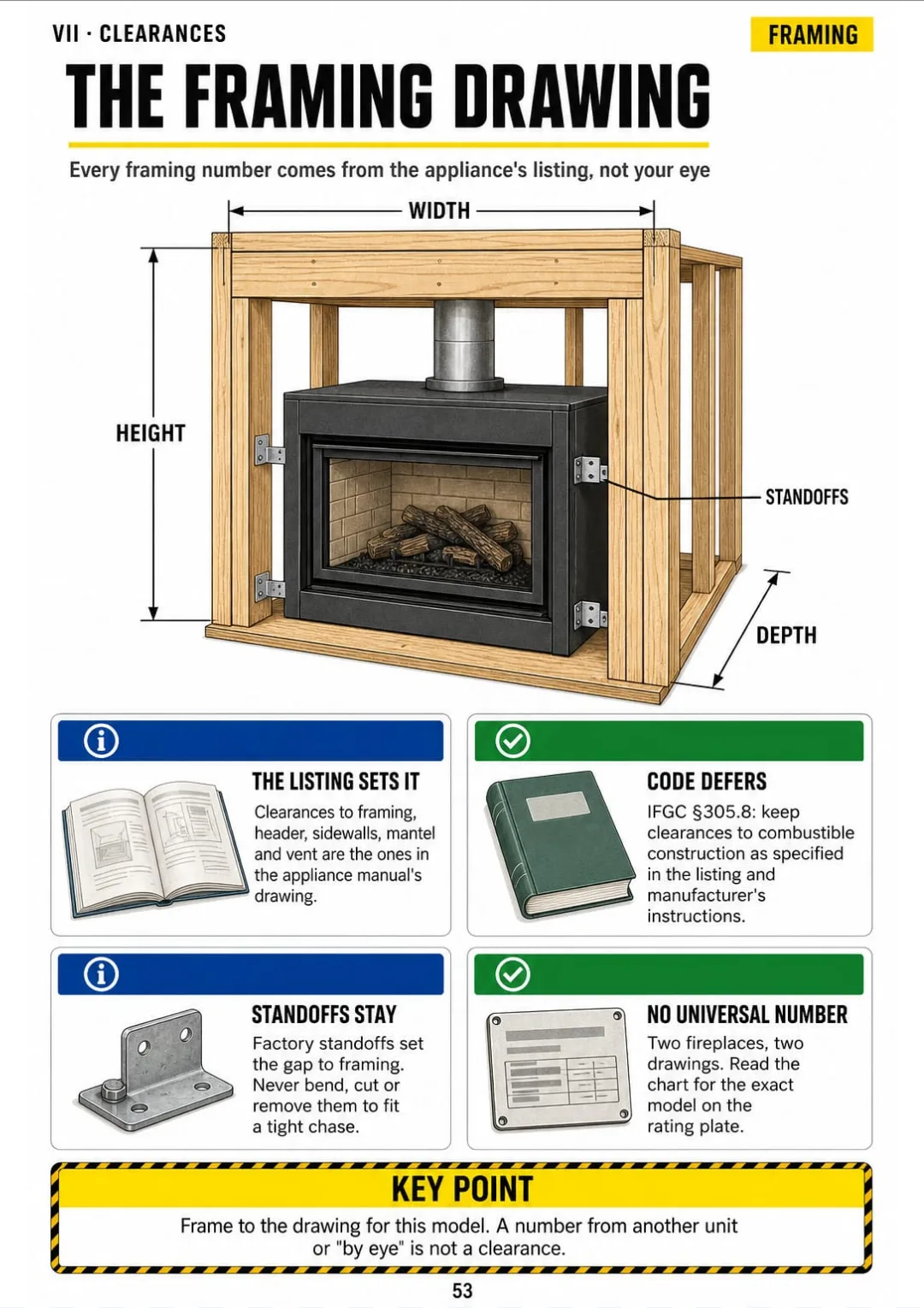
Width, height, depth, header and standoffs: all read from the listed framing drawing.
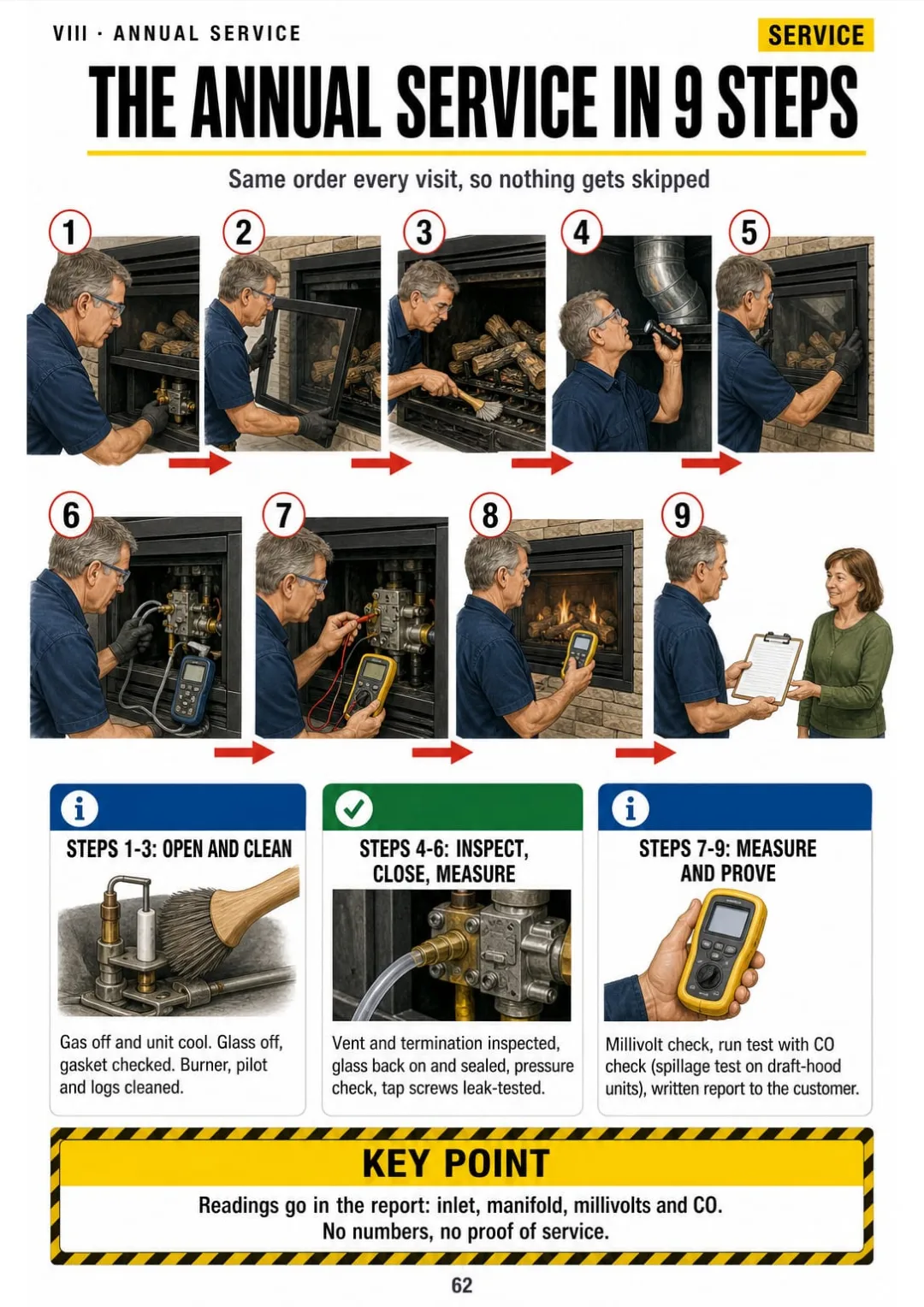
The annual service in 9 numbered steps: gas off to written report.

Swipe to see more →

These are real pages from the book. The table of contents is the full one: 8 parts and 64 topics.

The Problem Isn't You. It's How It Was Explained to You.

You're on a service call with a U-tube manometer on the manifold tap. The water moves, and you're not sure if you read one column or both.

You've gone through it in the manual. But it's paragraphs of fine print, and the one line that matters is buried in the middle.

U-tube: add both column moves (1.75 + 1.75 = 3.5 in. w.c.) · Digital: zero before connecting

In the book, the manometer is a drawing: the U-tube with both columns marked, 1.75 down and 1.75 up, for 3.5 in. w.c. Next to it, the digital one with a single reminder: zero it before you connect.

The gas train, draft and spillage, combustion air, the combination gas valve and the framing drawing work the same way: each one on its own page.

You get it, and you take the reading without going back to the manual.

COMPARE FOR YOURSELF

The Same Topic, Two Ways to Study It

THIS
  • The manual: line after line of fine print
  • The gas train explained only with words
  • You walk into the exam unsure
The gas supply to the appliance shall commence at the point of delivery, downstream of the meter, and continue through the piping system, which shall be sized in accordance with the applicable tables. An accessible manual shutoff valve shall be installed upstream of the appliance connector, and a sediment trap shall be provided as close to the appliance inlet as practicable. Gas then passes through the listed connector to the combination control valve, the orifice and, finally, the main burner assembly.
FOR THIS
  • The gas train in one drawing
  • Every part in order, in a box
  • You see it and you get it
Meter → piping → shutoff → trap → connector → valve → orifice → burner, in one drawing.
CONTENTS

Take a Look at the 8 Parts and 64 Topics

Basics, gas supply and piping, the manometer and gas pressure, venting, combustion air and vent-free, ignition and millivolts, clearances and installation, annual service and review: 68 pages, all illustrated.

IGas Hearth Basics · pp. 5-11
  1. How to Use This Book
  2. Who Rules: Listing, Code and the AHJ
  3. The Appliance Families
  4. Natural Gas vs Propane
  5. Complete vs Incomplete Combustion
  6. Pressure in Inches of Water Column
  7. Btu/h Input and the Rating Plate
IIGas Supply and Piping · pp. 12-18
  1. The Gas Train: Meter to Burner
  2. Pipe Materials and CSST Bonding
  3. Sizing the Line from Total Demand
  4. Shutoff Valve Location
  5. Appliance Connectors
  6. Leak Testing the Right Way
  7. Propane Supply Specifics
IIIThe Manometer and Gas Pressure · pp. 19-27
  1. Your Manometer: U-Tube or Digital
  2. Inlet Tap vs Manifold Tap
  3. Static vs Dynamic Inlet Pressure
  4. The Pressure Check, Always in the Same Order
  5. Typical Natural Gas Numbers
  6. Typical Propane Numbers
  7. Adjusting Manifold Pressure
  8. Clocking the Meter
  9. Converting Natural Gas to Propane
IVVenting · pp. 28-38
  1. Why We Vent: Draft and Spillage
  2. Direct Vent: The Coaxial Pipe
  3. Horizontal vs Vertical Runs
  4. Direct Vent Terminal Clearances to Openings
  5. The Termination Diagram: Decks, Soffits, Corners, Meters
  6. B-Vent and Natural Draft
  7. B-Vent Roof Termination
  8. Inserts in Masonry Chimneys: Co-Linear and Coaxial Liners
  9. Listed Components, No Mixing Brands
  10. Firestops, Thimbles and Attic Shields
  11. Vent Restrictors on Tall Runs
VCombustion Air and Vent-Free · pp. 39-43
  1. Room Volume: 50 Cubic Feet per 1,000 Btu/h
  2. Combustion Air Openings
  3. Vent-Free Appliances: The Limits
  4. How the ODS Pilot Works
  5. Carbon Monoxide: Testing and Alarms
VIIgnition and Millivolt Troubleshooting · pp. 44-52
  1. The Combination Gas Valve
  2. Standing Pilot: How It Holds
  3. The Thermocouple: About 30 Millivolts
  4. The Thermopile: The Generator for the Main Burner
  5. Measuring Millivolts, Always in the Same Order
  6. The Wall Switch Circuit
  7. A Good Pilot Flame
  8. Troubleshooting: Pilot Won't Light, Pilot Drops Out, Burner Won't Come On
  9. Electronic Ignition: IPI and Battery Backup
VIIClearances, Installation and Burners · pp. 53-61
  1. Clearances to Combustibles: The Framing Drawing
  2. Mantels and Projections
  3. Hearth and Floor Protection
  4. Hot Glass and Barrier Screens
  5. Log and Ember Placement
  6. Reading the Burner Flame
  7. Vented Log Sets in Wood-Burning Fireplaces
  8. Inserts and the Chimney: NFPA 211 Level II
  9. Freestanding Gas Stoves
VIIIAnnual Service and Review · pp. 62-68
  1. The Annual Service, in the Same Order
  2. Glass Doors and Gaskets
  3. Checking the Termination Outside
  4. Handing Off to the Customer
  5. All the Numbers on One Page
  6. The Most Frequent Mistakes in the Field
  7. Your Review Plan Before the Exam

One Page, One Topic, All Clear

Think of it this way:

It's a no-heat call in January. The pilot holds, the wall switch clicks, and the burner stays off. The customer is standing right behind you.

You open the book to the millivolt page and measure in order: thermopile, wall switch, TH/TP terminals. Then the combination gas valve, each part drawn with the symptom it gives when it fails.

14 × 16 × 8 ft = 1,792 cu ft: enough indoor air for about 35,800 Btu/h.

Same with the manometer, direct vent terminations, combustion air, the thermopile and the annual service: each one on its own page.

Gas Hearth Specialist Illustrated is 8 parts and 64 topics, all drawn, and at the end you get all the numbers on one page, the most frequent field mistakes and a review plan for the exam.

What you see drawn, you don't have to memorize.

What's Inside Gas Hearth Specialist Illustrated:

Ipp. 5-11

Gas Hearth Basics

How to use the book, who has the final say (listing, code, AHJ), the appliance families, natural gas vs. propane, combustion, inches of water column and the rating plate.

IIpp. 12-18

Gas Supply and Piping

The gas train from meter to burner, pipe materials and CSST bonding, line sizing, shutoff location, connectors, leak testing and propane supply.

IIIpp. 19-27

The Manometer and Gas Pressure

Read any manometer without second-guessing: U-tube and digital, inlet vs manifold tap, static vs dynamic pressure, the pressure check in order, typical numbers, clocking the meter and LP conversion.

IVpp. 28-38

Venting

Draft and spillage, direct vent coaxial pipe, terminal clearances, the termination diagram, B-vent, liners for inserts, listed components, firestops and restrictors.

Vpp. 39-43

Combustion Air and Vent-Free

Room volume per 1,000 Btu/h, combustion air openings, vent-free limits, how the ODS pilot works, and CO testing and alarms.

VIpp. 44-52

Ignition and Millivolt Troubleshooting

The combination gas valve, standing pilot, thermocouple and thermopile, measuring millivolts in order, the wall switch circuit, troubleshooting and IPI.

VIIpp. 53-61

Clearances, Installation and Burners

Clearances to combustibles, mantels, hearth protection, hot glass and screens, logs and embers, burner flame, vented log sets, inserts and freestanding stoves.

VIIIpp. 62-68

Annual Service and Review

The annual service in order, glass and gaskets, the outside termination, the customer hand-off, all the numbers on one page, frequent mistakes and your review plan.

At the end of the book: All the numbers on one page, the most frequent field mistakes and a review plan before the exam.
Plus: 2 Free Books

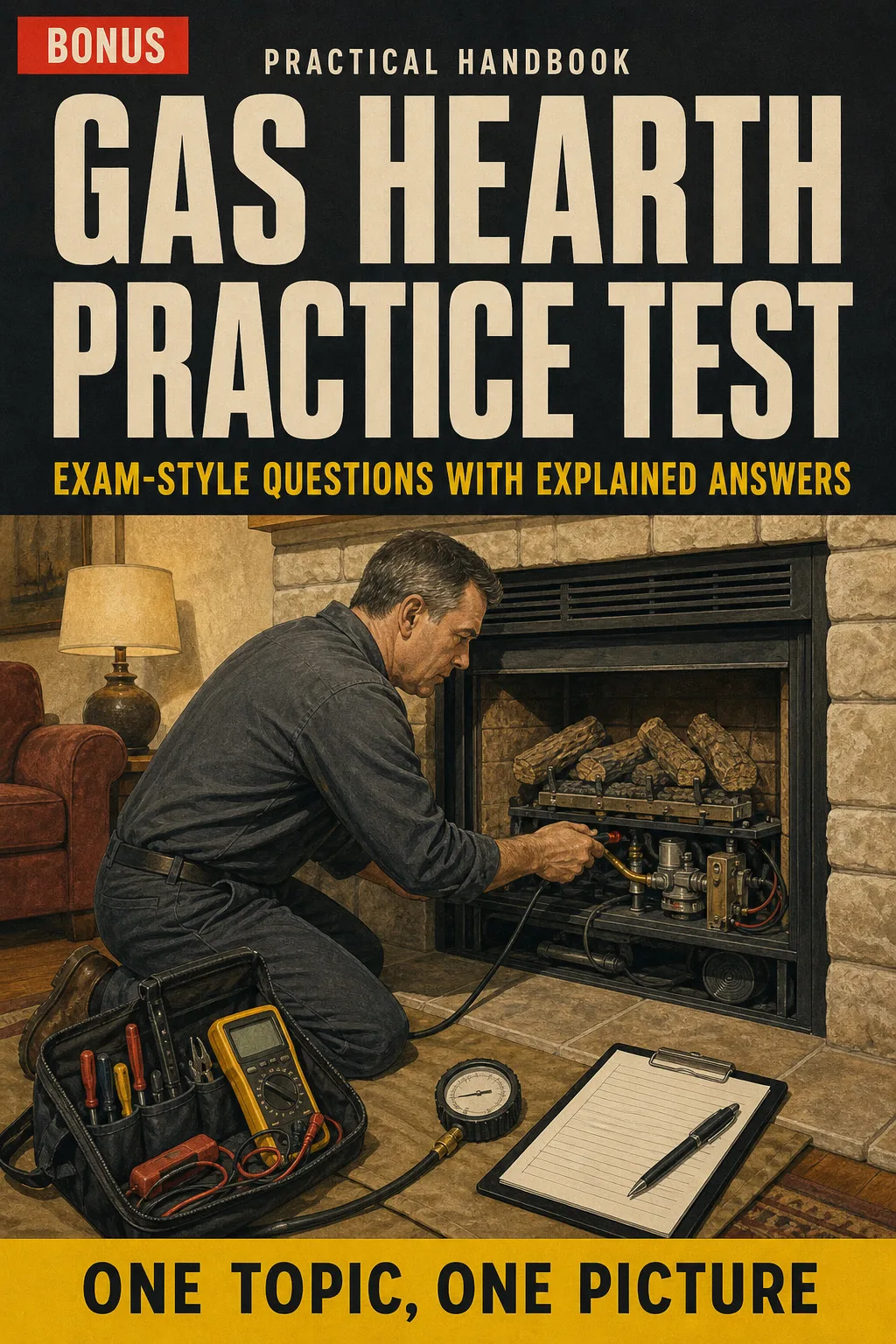
Gas Hearth Practice Test: Exam-Style Questions with Explained Answers

BONUS 1: «Gas Hearth Practice Test: Exam-Style Questions with Explained Answers»

Value on its own: US$ 17.90

Test yourself on venting, pressures, ignition and clearances, and see why each answer is right, so you know which pages to review before exam day.

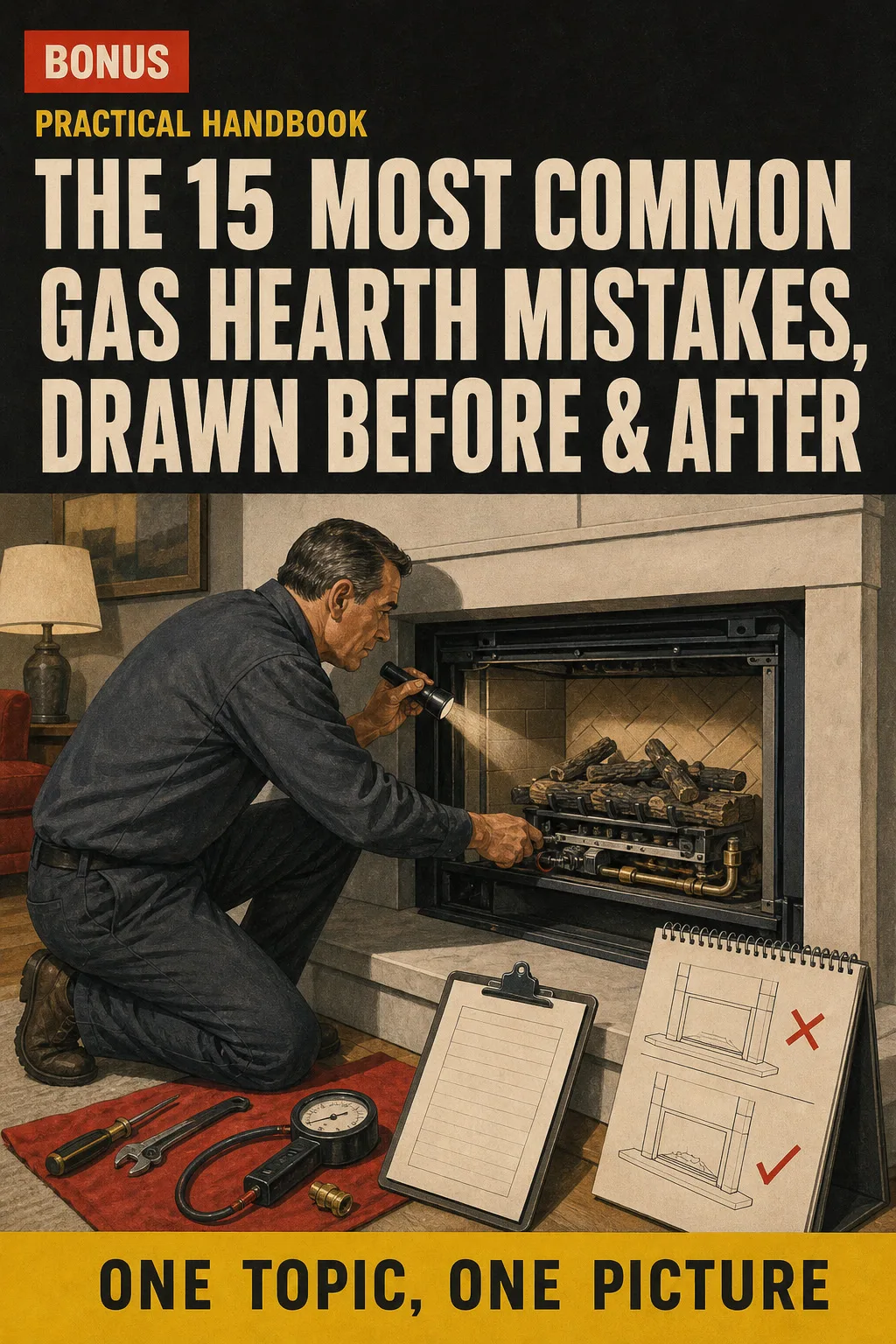
The 15 Most Common Gas Hearth Mistakes, Drawn Before & After

BONUS 2: «The 15 Most Common Gas Hearth Mistakes, Drawn Before & After»

Value on its own: US$ 14.90

See the most frequent installation and service mistakes side by side with the correct version, so you spot them on a job before they turn into a callback.

Gas Hearth Specialist Illustrated with 2 Free Books

  • Gas Hearth Specialist Illustrated: 68 illustrated pagesUS$ 63
  • BONUS 1: Gas Hearth Practice Test: Exam-Style Questions with Explained AnswersUS$ 17.90
  • BONUS 2: The 15 Most Common Gas Hearth Mistakes, Drawn Before & AfterUS$ 14.90
  • High-resolution PDF to printIncluded
Total value US$ 95.80
YOUR PRICE:
US$ 27
You save US$ 68.80
YES, I WANT GAS HEARTH SPECIALIST ILLUSTRATED FOR US$ 27

📄 This is a digital PDF book sent to your email: nothing is printed or shipped.

Secure purchaseEncrypted payment30-day guarantee

PDF by email: We email you Gas Hearth Specialist Illustrated as a PDF, together with the two free books. It's a single payment: no installments, no extra charges.

Who This Book Is For

You're adding gas to your work

You're adding gas to your work

You know wood stoves and chimneys. Here direct vent, B-vent and vent-free each get their own drawn page, so you see what changes.

Your certification exam is coming

Your certification exam is coming

A review in the same order as the job, with every code value and its source. Then the practice test shows you which pages to go back to.

You already service gas fireplaces

You already service gas fireplaces

Print the pages you use most and keep them in the truck: the pressure check, millivolts and the annual service, step by step.

Everything You Get Today

US$ 95.80US$ 27
YES, I WANT GAS HEARTH SPECIALIST ILLUSTRATED FOR US$ 27

📄 This is a digital PDF book sent to your email: nothing is printed or shipped.

30DAYS
GUARANTEE

30-Day Guarantee

Try Gas Hearth Specialist Illustrated for 30 days, bonus books included.

We refund everything if the file won't open, if the book isn't what you see here, if you were charged twice or if the email doesn't arrive. Just email us.

You pay once. No subscriptions.

Frequently Asked Questions

Is it for me if I've been installing for years and haven't studied in decades?

Yes. It isn't written for beginners: it puts what you already do in order, one drawn page per topic, so you can review fast.

Where does the content come from?

From the current NFPA 54 / ANSI Z223.1 and the IFGC, NFPA 211, the ANSI Z21 appliance standards and manufacturers' listed instructions. Every code value comes with its source. States and cities adopt these codes with their own amendments, so your local code and AHJ have the final word.

Is it official material?

No. It's independent study material, not issued or endorsed by any code body or certification organization. It doesn't give you a certificate or continuing education credits: the certification comes only from the certifying body, after its own exam.

Does it replace a course or formal training?

No. It helps you study and review. On the job, the manufacturer's manual and your local code and AHJ always come first.

Are the practice questions the ones on the exam?

No. They're written for this book in exam style, with explained answers, so you know what to review.

When and how do I get it?

The book and the 2 free books arrive as PDFs by email, at the address you enter at checkout.

Do I have to pay every month?

No. It's a one-time payment.

Can I have it on paper?

Yes. The PDF is printable: print the whole book or just the pages you want in the truck.

How does the refund work?

You have 30 days. We refund everything if the file won't open, if the book isn't what you see on this page, if you were charged twice or if the email doesn't arrive: just email us.

Before You Close This Page

No more rereading the manual without it sticking.

You see the manometer reading drawn, and it clicks.

You walk into the exam knowing where everything is.

Drawings make studying faster.

The book is right below.

One-time payment: US$ 27 · Guarantee: 30 days · PDF by email

YES, I WANT GAS HEARTH SPECIALIST ILLUSTRATED FOR US$ 27

📄 This is a digital PDF book sent to your email: nothing is printed or shipped.